Choosing the right type of massage therapy can make a huge difference in how you feel during and after your session. Two popular options are deep tissue and therapeutic massage, but they are aimed at different goals in mind. Understanding the difference between deep tissue vs therapeutic massage can help you choose an approach that best matches your body’s needs, comfort level, and wellness goals.
While both techniques can help relieve muscle tension and support relaxation, they differ in pressure, techniques, and treatment focus. Here’s what you should know before booking your next massage
What Is Deep Tissue Massage?
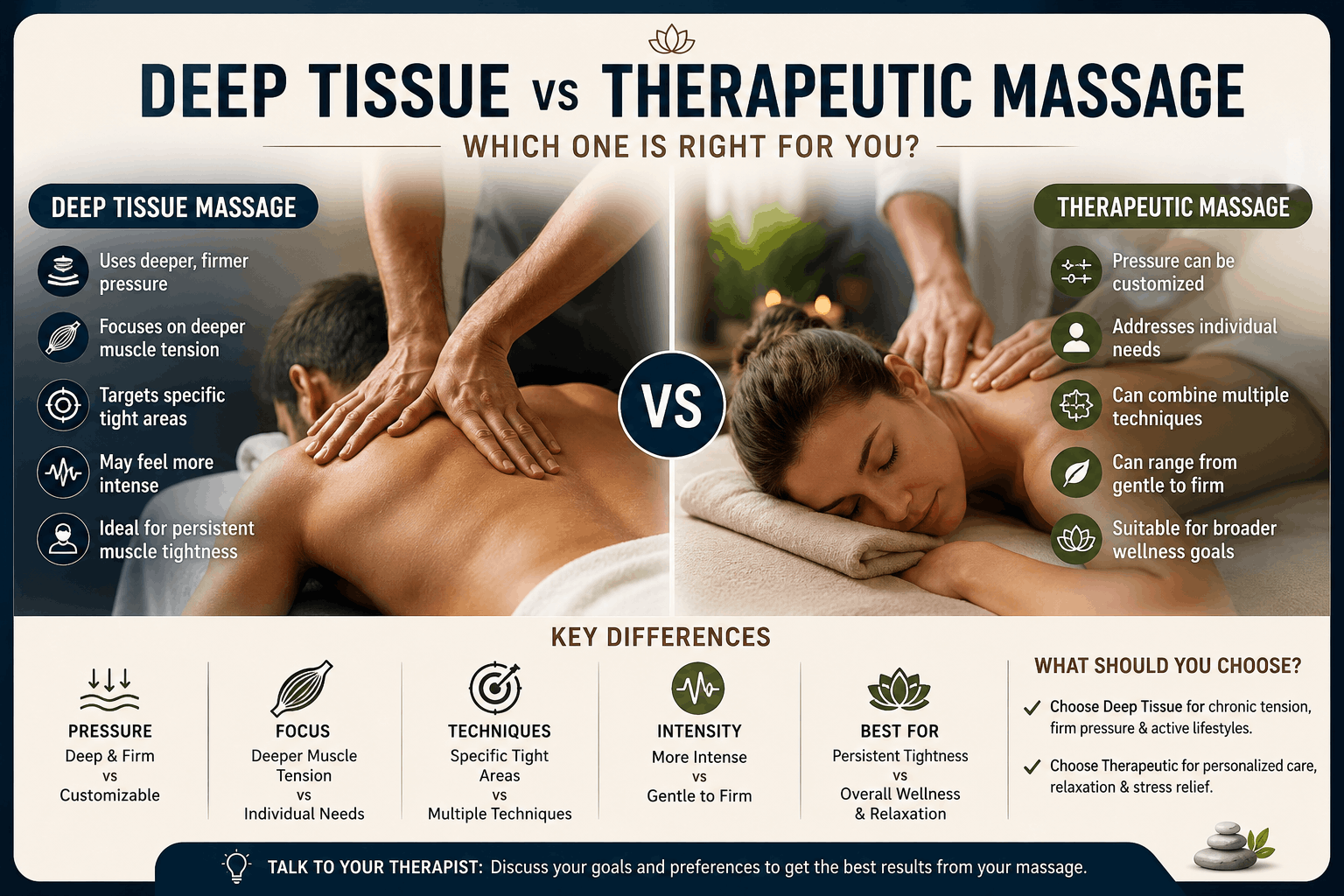
Deep tissue massage is a method that uses slower, more emphasized strokes and strong pressure to target deeper layers of muscles and connective tissue. It is usually chosen by people facing persistent muscle tension, stiffness, or areas of tightness due to physical activity and repetitive movements.
During a deep tissue session, the massage therapist might apply their fingers, thumbs, forearms, or elbows to give concentrated pressure. The goal is not just to provide relaxation but to work on particular areas where deeper tension has developed.
Deep tissue massage might be specifically helpful for people who:
- Experience ongoing muscle tightness
- Have physically demanding jobs or lifestyles
- Exercise or participate in sports daily
- Spend long hours sitting at a desk
- Hold tension in the shoulders, back, or legs
- Prefer firmer pressure during massage
Because the pressure can be more intense, communication with your therapist is necessary. A massage must be therapeutic instead of unnecessarily painful.
What Is Therapeutic Massage?
Therapeutic massage is a more individualized approach that concentrates on addressing specific physical concerns while also supporting overall relaxation and well-being. Instead of following one fixed technique, a therapist can merge different massage techniques according to your requirements.
A therapeutic massage session might include moderate or firm pressure, stretching, focused work on problematic areas, and other techniques developed to address muscle tension and physical discomfort.
It can be a good option if you need a massage that is customized to your body instead of just selecting a specific pressure level.
Therapeutic massage might be perfect for people who need to:
- Reduce everyday muscle tension
- Address specific areas of discomfort
- Enhance relaxation and body awareness
- Support mobility and flexibility
- Manage stress-related physical tension
- Receive a customized massage experience
The flexibility of therapeutic massage makes it valuable for people with different objectives and preferences.
Deep Tissue vs Therapeutic Massage: Key Differences
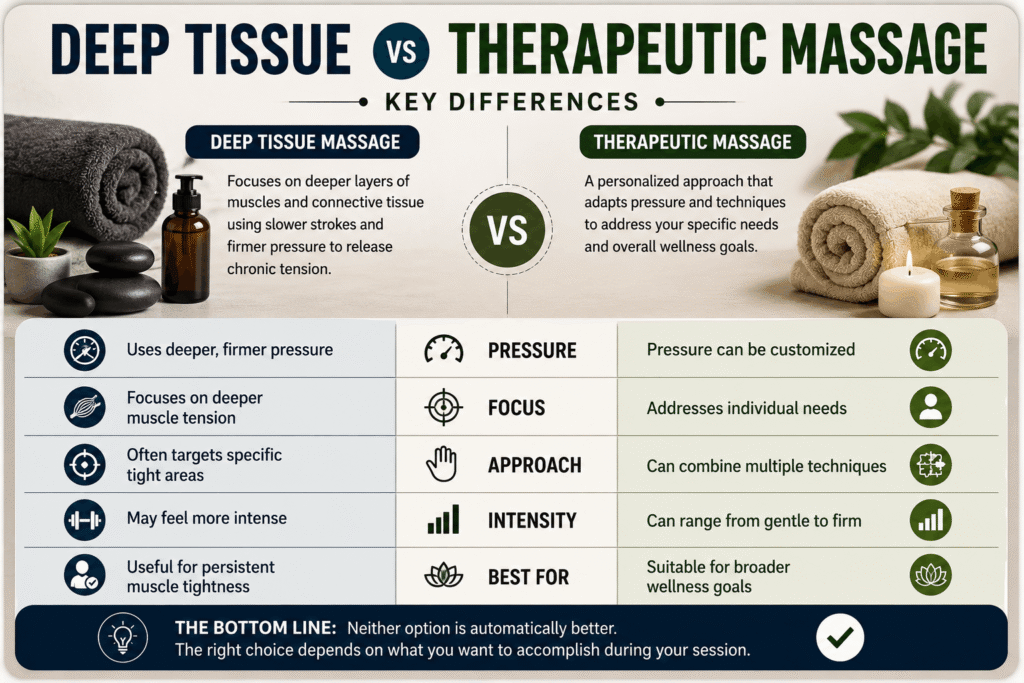
When comparing deep tissue vs therapeutic massage, the largest difference is their overall approach.
Deep tissue massage is mainly focused on deeper layers of muscle and connective tissue. The therapist typically uses slower strokes and firmer pressure to address areas of significant tension.
Therapeutic massage, on the other hand, is more personalized. The therapist can adapt pressure and methods based on your specific issues. The session might be focused on relaxation, muscle tension, mobility, or a combination of goals.
Deep Tissue Massage | Therapeutic Massage |
Uses deeper, firmer pressure | Pressure can be customized |
Focuses on deeper muscle tension | Addresses individual needs |
Often targets specific tight areas | Can combine multiple techniques |
May feel more intense | Can range from gentle to firm |
Useful for persistent muscle tightness | Suitable for broader wellness goals |
Which Massage Is Better for Muscle Tension?
If you have specifically deep or persistent muscle tightness, deep tissue massage may be the best choice. Its focused pressure can help target areas that feel especially tense.
However, therapeutic massage can also be an excellent option for muscle tension, as the therapist can tailor the session to where you are experiencing discomfort and how your body reacts to the treatment.
If your muscle tension is linked to stress, your overall massage experience might also benefit from relaxation-focused techniques. You can learn more about the connection between massage and relaxation in our guide to massage therapy for stress relief.
Which Massage Is Better for Stress Relief?
When your primary goal is relaxation and stress management, therapeutic massage may offer more flexibility. The therapist can adjust pressure and techniques to create a calming experience while still addressing areas of muscle tension.
Deep tissue massage can also provide relaxation benefits, but its firmer pressure may not be the first choice for someone who wants a gentle, calming session.
Your preferred pressure level matters. Some people enjoy firm pressure, while others find lighter or moderate pressure more relaxing.
What Should You Choose?
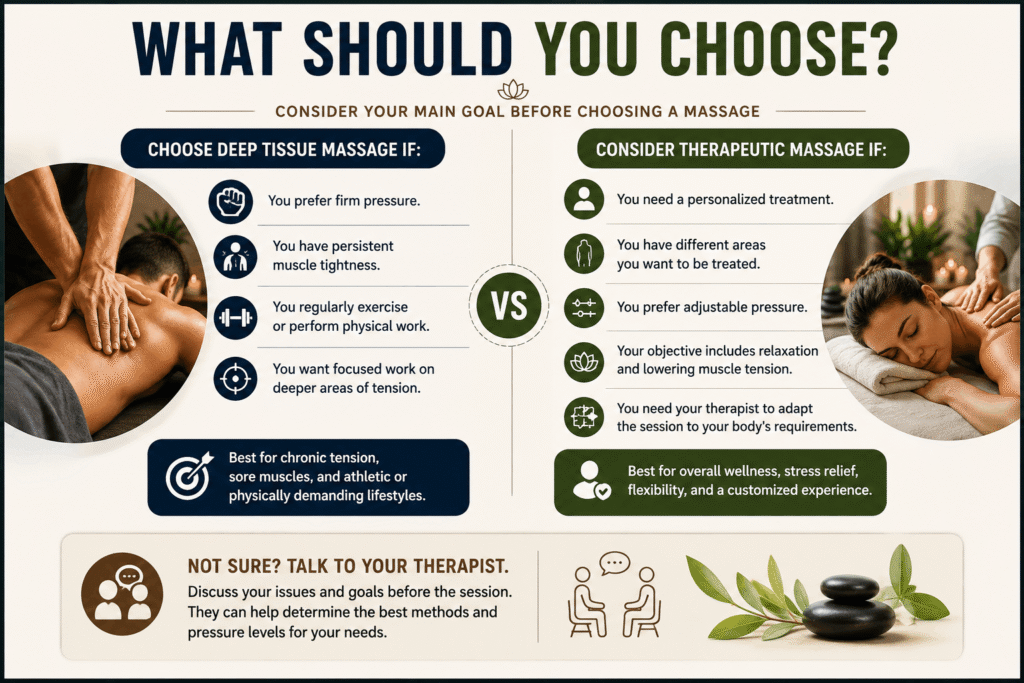
Consider your main goal before choosing a massage.
Choose deep tissue massage if:
- You prefer firm pressure.
- You have persistent muscle tightness.
- You regularly exercise or perform physical work.
- You want focused work on deeper areas of tension.
Consider therapeutic massage if:
- You need a personalized treatment.
- You have different areas you want to be treated.
- You prefer adjustable pressure.
- Your objective includes relaxation and lowering muscle tension.
- You need your therapist to adapt the session to your body’s requirements.
If you’re not sure, you can explore your issues with your massage therapist before the session. They can help determine which methods and pressure levels might be most appropriate for your goals.
Can You Combine Different Massage Techniques?
Yes. A massage session does not always have to follow a single technique from start to end. Depending on your needs, a therapist may incorporate different methods throughout the session.
For example, a session might start with lighter pressure to warm up the muscles before going towards areas of deeper tension. Other parts of the body might require gentler techniques.
This personalized approach can make the experience more comfortable and efficient for your personal needs.
How Often Should You Get a Massage?
The perfect massage frequency relies on your lifestyle, objectives, activity level, and how your body reacts to treatment. Some people benefit from occasional sessions for relaxation, while others might prefer a more continuous wellness routine.
If you’re wondering about the correct schedule, our guide on how often you should get a massage explains factors that can help you determine an appropriate frequency.
FAQs - deep tissue vs therapeutic massage
1. What is the difference between deep tissue and therapeutic massage?
Deep tissue massage uses firmer, focused pressure to target deeper muscle tension, while therapeutic massage is more customized to address individual concerns, comfort levels, and wellness goals.
2. Is deep tissue massage better than therapeutic massage?
Neither is automatically better. Deep tissue massage may suit persistent muscle tension, while therapeutic massage offers a more flexible approach based on your specific needs and preferences.
3. Is deep tissue massage painful?
Deep tissue massage can feel more intense than other massage techniques, but it should not cause excessive or sharp pain. Communicating with your therapist helps ensure the pressure remains comfortable.
4. Which massage is better for stress relief?
Therapeutic massage can be a good choice for stress relief because pressure and techniques can be adjusted to create a relaxing, personalized experience.
5. How do I choose between deep tissue and therapeutic massage?
Consider your main goal, preferred pressure, and areas of tension. If you’re unsure, discuss your needs with your massage therapist so they can recommend an approach suited to you.
Final Thoughts
Understanding deep tissue vs therapeutic massage makes it easier to select a treatment that fits your personal needs. Deep tissue massage focuses on deeper layers of muscle and typically uses firmer pressure, while therapeutic massage offers a more flexible and personalized approach.
The best option ultimately depends on your goals, comfort level, and areas of concern. If you’re uncertain which approach is right for you, discussing your needs with a qualified massage therapist can help you make a more informed decision and enjoy a session tailored to your body.